



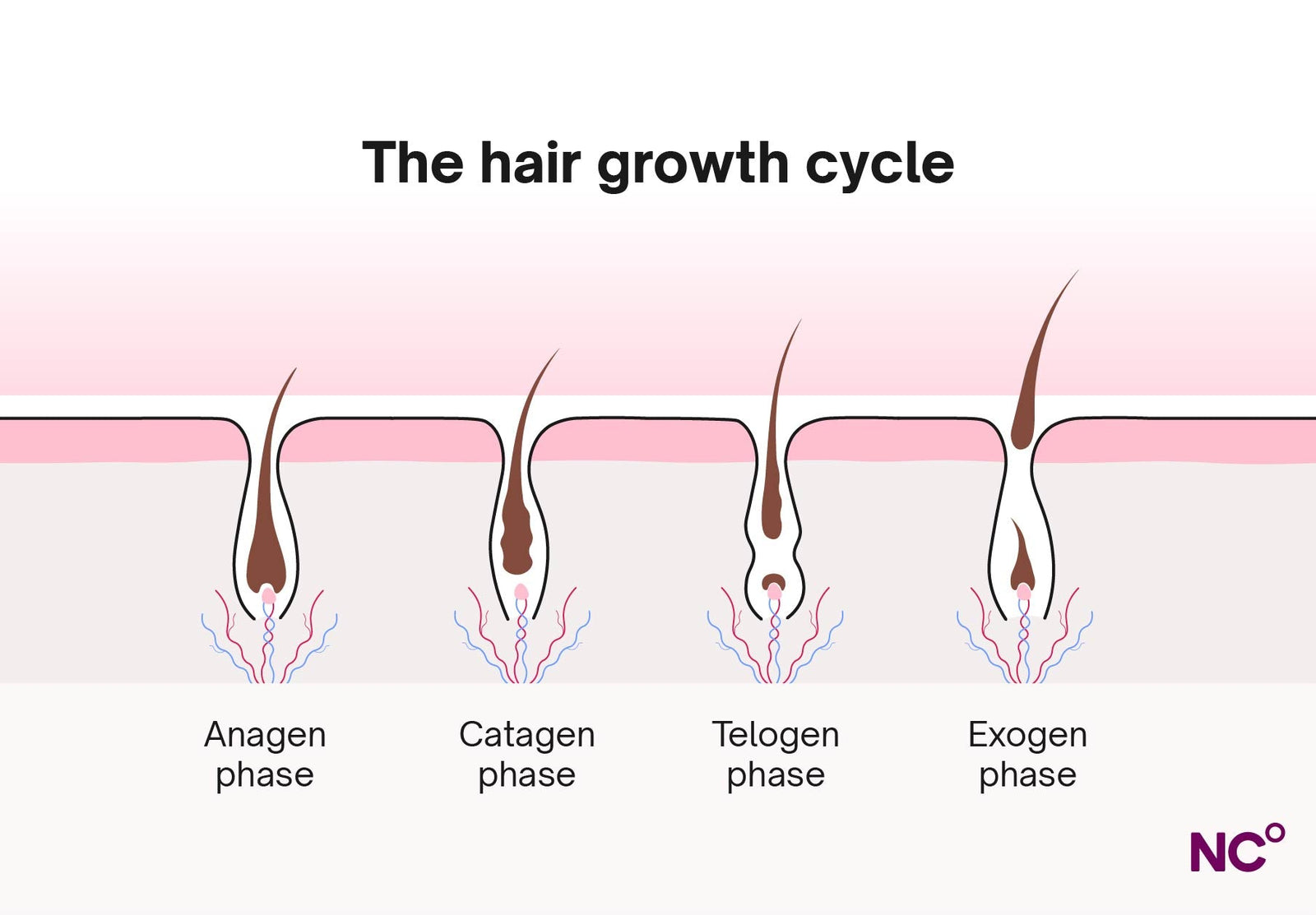

Although hair appears to be strong and resilient, it is actually highly susceptible to damage caused by environmental factors, including pollution, the sun, wind, heat, and adverse weather. Daily exposure to these elements gradually breaks down the hair's structure and weakens it, impacting the way that it looks, feels, and performs. In men, this damage often takes the form of dryness, brittle hair, thinning hair, or a lack of shine, despite consistent use of hair products and following a good hair care regimen.
To properly care for your hair, the first step is understanding the negative effect that environmental stressors have on hair on a cellular level.
How Is Hair Structured?
A hair shaft consists of three principal structures:
1. Cuticle: The cuticle is the outermost structure of the hair. It is composed of several overlapping layers of scales that create a barrier to protect the inner structures.
2. Cortex: The cortex lies directly below the cuticle and provides strength, elasticity, and colour to the hair. It is the main structural component of the hair shaft.
3. Medulla: The medulla is the innermost component of the hair shaft, but it is not always present.
Healthy hair has an intact cuticle, which prevents damage to the cortex. Environmental stressors can damage the cuticle, exposing the cortex, and causing it to become weak, lose moisture, and break off.
Pollution and Airborne Particles
Urban pollution contains microscopic particles that settle on hair and scalp throughout the day. These particles cling to the cuticle, lifting and roughening it over time. Once the cuticle is compromised, hair loses its ability to retain moisture.
Pollution also generates free radicals, which break down the proteins in hair fibers. This results in:
-
Dull, lifeless hair
-
Increased tangling
-
Weakened strands prone to snapping
Over time, polluted environments can accelerate hair thinning by irritating the scalp and disrupting healthy follicle function.
Sun Exposure and UV Damage
Just like skin, hair is affected by ultraviolet (UV) radiation. Prolonged sun exposure degrades keratin, the protein that gives hair its structure. UV rays also oxidize melanin, which is why hair can lighten, turn brassy, or appear faded after extended time outdoors.
Structurally, sun damage:
-
Dries out the cuticle
-
Reduces elasticity
-
Makes hair brittle and stiff
Men who spend long hours outdoors or participate in sports often experience faster hair damage if protective care is ignored.
Weather Extremes: Heat, Cold, and Wind
Environmental stress isn’t limited to sunlight and pollution. Extreme temperatures also play a role.
-
Heat and low humidity pull moisture from hair, causing dryness and rough texture.
-
Cold air and wind strip natural oils from both hair and scalp, leading to breakage and increased shedding.
-
Rapid weather changes prevent hair from maintaining moisture balance, weakening the cuticle over time.
This is why hair often feels worse during seasonal transitions.
Hard Water and Environmental Minerals
In many regions, water contains high levels of minerals like calcium and magnesium. These minerals build up on the hair shaft, forming a film that prevents moisture and nutrients from penetrating. Over time, this buildup stiffens hair fibers, making them more prone to snapping and dullness.
Long-Term Effects on Hair Health
When environmental stress consistently damages hair structure, the results extend beyond appearance. Weakened strands break more easily, growth appears slower, and the scalp can become irritated or inflamed. This creates an unhealthy environment for hair follicles, impacting density and thickness over time.
Protecting Hair from Environmental Stress
While environmental exposure is unavoidable, damage isn’t inevitable. Gentle cleansing to remove pollutants, regular conditioning to seal the cuticle, and nourishing oils or serums help restore lost moisture and reinforce hair structure. Supporting hair from within through hydration, nutrition, and stress management also strengthens its resistance to damage.
Final Thoughts
Environmental stress alters hair structure gradually but consistently. Pollution, sun exposure, harsh weather, and mineral buildup all compromise the cuticle, weaken protein bonds, and disrupt moisture balance. By understanding how these stressors affect hair on a structural level, men can take proactive steps to preserve strength, texture, and long-term hair health, no matter the environment they live in.



Leave a comment (all fields required)